
Icebreaker games · updated 12 October 2026
Icebreaker games for work meetings, offsites and meetups
An icebreaker game is a short activity at the start of a meeting or event that gets every person to speak once, early, about something they have an opinion on. These come from 40+ ELC meetups for 3,300+ engineering leaders, cut down to fit a 30-minute team meeting, an offsite or a remote call. Each one says what it needs and how it fails.
5-minute icebreakers for meetings
The best 5-minute icebreaker asks one question that people disagree on. It needs no tools, gets the quiet half of the room talking in the first minutes, and ends on time. A question with an obvious answer is a headcount, so pick one where the room will split.
| Format | Time | Fits | Say this |
|---|---|---|---|
| Forced choice | 2 min | Any meeting over five people | "Hands up if our biggest risk this quarter is hiring. Hands up if it is scope." |
| One-word check-in | 2 min | Retros, planning, a new team | "In one word, what is the biggest blocker in your team right now?" |
| Hardest problem round | 5 min | Cross-team syncs, a new manager | "What is the hardest problem on your plate this week?" |
| Standing poll | 1 min | All-hands, a room over 30 | "Stand up if you shipped something to customers this week." |
| Monday commitment | 3 min | The end of an offsite or workshop | "Write one thing you will do differently on Monday." |
At an ELC meetup the forced choice is the first thing the host says, and it is about the topic of the night: "AI will replace half your engineers in three years. Hands up if yes. Hands up if that is nonsense." In a team meeting the same move works on the quarter's real argument. The one-word check-in comes from the word cloud ELC runs before the Q&A, and the Monday commitment from the Wall of Wins by the bar.
Icebreaker games for adults (no awkward ones)
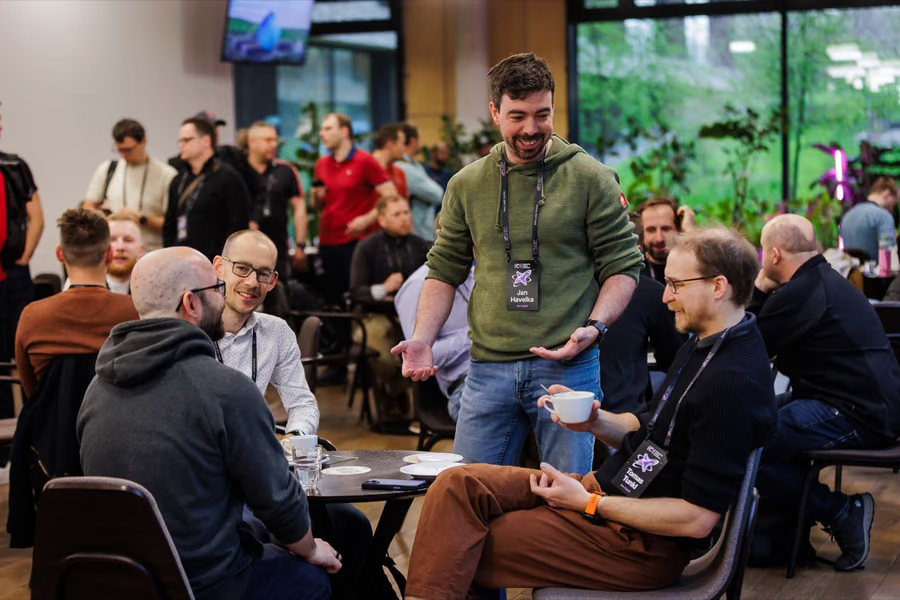
Adults stop playing when a game treats them like children. An icebreaker for adults works when the prompt is about their real work and the reward is status, not a branded pen. That rule holds at an offsite, a team day or a meetup with 150 strangers.
- Human bingo. A 5x5 card of prompts like "did a reorg this year". Players find a person for each square, one name per card. Best for 30 to 150 people who do not know each other. Make the cards with the free human bingo generator.
- Speed networking. Three to five minute pairs, a question on the screen, a bell to switch. Breaks up the groups people arrive in. The speed networking question generator prints a set per round.
- Hot Takes Table. One marked table, one sign: "Speak only your most controversial opinion. No agreement allowed." The bold sit down, the polite walk past, and both are fine.
- Quiz on the content. Five questions on what the speakers or the workshop just covered, a leaderboard on the screen, three winners called up. Four minutes, and the room ends laughing.
- Bring the question. Two days before, ask people for their sharpest question. The best three open the discussion with the asker's name on the screen.

Icebreakers for remote and hybrid teams
A remote icebreaker needs a written channel next to the spoken one. Post the question in the chat, give people ten seconds to type, then go around in a fixed order. ELC meetups run in person, so the formats below are the room versions moved onto a call.
- Poll instead of hands. The forced choice as a two-option poll. Show the result on screen and ask one person from each side why.
- One word in the chat. The check-in, typed. Read three words out loud and ask the person behind the strangest one to explain.
- Breakout pairs. Speed networking on video: two rounds of four minutes, random rooms, one question each. More rounds and the energy drops.
- Show one object. Camera on, one thing from the desk that tells a story. Works in hybrid meetings because the room can do it too.
Icebreaker generator
Pick the setting and how many meetings you need. You get one opener per meeting, and no question repeats until the whole set is used. Copy it into your meeting notes or print it.
48 icebreaker questions for work
The three sets the generator draws from. Each question has a story in the answer.
Team meetings
- What is the hardest problem on your plate this week?
- In one word, how is your team doing right now?
- What did you ship last week that nobody noticed?
- Which meeting on your calendar would you cancel tomorrow?
- What is one thing you learned from a customer this month?
- What would you stop doing if nobody checked?
- What decision is waiting on you right now?
- What tool did you start using this quarter that you would not give back?
- Which part of our process slowed you down this week?
- What is one thing another team does better than us?
- What did you change your mind about recently?
- If you had a free day with no tickets, what would you fix?
- What is a question you have been afraid to ask in this meeting?
- What made you laugh at work this week?
- Who helped you this week, and with what?
- What is the oldest thing on your to-do list?
- What do you use an AI assistant for at work, and where does it let you down?
- What would a new joiner find confusing about how we work?
Offsites and team days
- What is the best team you have been part of, and what made it work?
- What is a mistake from this year that taught you the most?
- What job did you want at 15, and what is left of that today?
- What is your unpopular opinion about how this company works?
- What is one skill you have that nobody here knows about?
- Which book, talk or person changed how you work?
- What would you build with one week and no meetings?
- What is the worst advice you were ever given at work?
- Where were you five years ago, and what did you get wrong about today?
- What does a good day at work look like for you?
- What is something you are proud of that is not on your CV?
- Which decision of the last year would you take back?
- What do people outside tech think you do all day?
- What do you want this team to be known for in a year?
- What is a habit you started this year that stuck?
- Who do you go to when you are stuck, and why them?
Remote and hybrid teams
- What is on your desk right now that tells a story?
- In one word, what is your energy today? Type it in the chat.
- What is the view from your window today?
- What is one thing that is easier remote, and one that is harder?
- What time zone do you wish the team worked in, and why?
- What did you do in your last break away from the screen?
- Which message this week deserved a call instead?
- What is a small thing a teammate did that made your week easier?
- What would you put in the team handbook that is not there yet?
- Camera on: show one object that explains your weekend.
- What is a channel or thread you would archive tomorrow?
- What do you miss from working in one room, if anything?
- What is one meeting that should have been a document?
- Poll: async update or live stand-up, and why?
When an icebreaker flops
Most icebreakers that fall flat fail for one of five reasons. Each has a cheap fix.
- The question is polite. "Who is here for the first time?" tells you a number and starts nothing. Ask about something people argue over.
- "Introduce yourself to your neighbour." People say their name and job title and stop. A forced choice gives them something to disagree about instead.
- The prize is a pen. A senior crowd does not compete for swag. A 1:1 with a speaker, a front-row seat with a name on it or a signed book does the job.
- Nobody says the rule out loud. Few people read the card or the slide. One sentence from the host decides whether the game runs.
- It runs too long. An opener over five minutes eats the meeting. Cut it at the time you announced, even when it is going well.
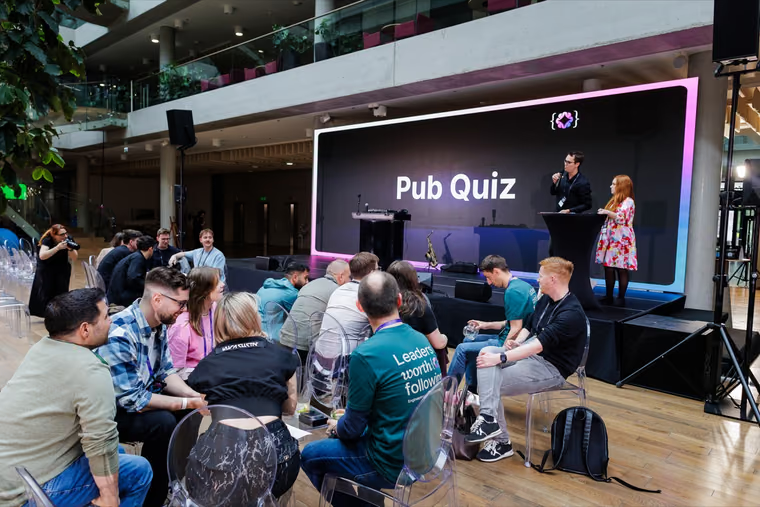
Planning the room as well as the opener? Room design for meetups covers the seating, the bar and the walking paths that make the games above possible.
For companies
Want ELC to run the whole night at your office?
Your venue, your speaker. The ELC team brings the topic, the audience of 3,300+ engineering leaders, the games, the host and the photos. A median of 125 confirmed registrations across the last 13 public meetups.
See what ELC runs for companiesQuestions people ask
What are some good 5-minute icebreakers for meetings?
A forced-choice question with two answers, a one-word check-in, or one shared question everyone answers in 30 seconds. All three need no tools and end on time. The forced choice works best in a group over five people, because the room sees that people disagree.
What are some fun and quick icebreakers?
A standing poll takes one minute: "stand up if you shipped something this week". The room reads itself and people laugh at who stands. A quiz with five questions and three winners takes four minutes and ends an event on a high. Both are run at ELC meetups.
What is the difference between an icebreaker and a networking game?
An icebreaker happens once, at the start, with the whole group at the same time. A networking game runs for 15 to 30 minutes and moves people between partners, like human bingo or speed networking. A meetup uses both; a team meeting needs only the icebreaker.
Do icebreakers work with senior people?
Yes, when the question is about their work and has a real answer. "What is the hardest org problem you are solving right now?" works with a room of CTOs at ELC meetups. "Two truths and a lie" usually gets polite smiles and nothing after it.
How do I run an icebreaker on a remote call?
Put the question in the chat before you ask it out loud, so people can type while they think. Ask for one word or one sentence, and call names in a set order so nobody waits to be picked. Keep it under five minutes; on video, long openers feel longer.