Meetup OS · The night
Room design: the three-act night
A meetup is three products: the week before, the three hours on the night, and the artifact that lands on Monday. This page is the middle one, minute by minute, and the two around it in short.
The rule every slot has to pass
Every minute of all three acts does one of three things: makes someone measurably smarter, makes two strangers talk to each other, or provokes a reaction. Laughter, disagreement, "wait, what?". A slot that does none of the three gets cut. Polite is the failure mode.
| Act | Window | Owner | Job |
|---|---|---|---|
| I · Before | D-7 to T-1h | Content marketer + Head of Community | Build anticipation. The thesis enters their head before they walk in. A poll they see answered on the first slide, four to six faces to look for, a question of theirs that will open Q&A with their name. |
| II · On the night | T-1h to T+180 | Founder + Event manager + Head of Community | High-signal talks, controversy, and networking somebody designed. |
| III · After | D+0 to D+7 | Content marketer + Designer | Land the experience: photos, slides on the site within 72 hours, the takeaway assets, a personal message to every first-timer the same night. The full close is on After the meetup. |
Act II: the 3-hour shape
Doors at T-1h, talks at T=0, lights out at T+180. Content block 75 minutes or less. Networking 75 minutes or more. The networking is half the product, not the afterparty; if the content bleeds past 75, it eats the part people came for.
| Time | What happens | Owner |
|---|---|---|
| T-3h | Event manager on site. Catering received, room set. | Event manager |
| T-90min | Slides on the real screen, USB backup, clicker, microphone. Walk-in test: one person walks from the street to a seat as a stranger and fixes the signage where they hesitated. | Event manager + Head of Community |
| T-1h | Doors open. Music on. A greeter at the door puts a sticker on every first-timer's name tag. Title card and walk-in carousel looping: last month's recap, four to six faces to meet tonight, the thesis as a half-sentence, the poll QR. The host is in the crowd, not backstage. | Event manager + Greeter + Founder |
| T-30min | First-timer huddle by the bar. Fifteen minutes. Each first-timer leaves walked over to one regular. | Community ambassador |
| T=0 | The frame, five minutes: mission, principle, the thesis as one sentence, what the poll said, housekeeping, code of conduct, the Q&A tool, a forced-choice icebreaker, the venue partner's 60 seconds, tonight's speakers on one slide. | Founder |
| T+5 | Talk 1. The speaker opens with a story, not a bio. One takeaway slide with a QR at the end, one live poll on the talk's claim. | Speaker |
| T+27 | Ten-minute break. Drinks. The photographer shoots the room moving. The videographer pulls two or three people aside for interviews. | Event manager + Videographer |
| T+37 | Talk 2. Same rules. | Speaker |
| T+58 | Q&A. The three sharpest pre-submitted questions go first with the asker's name on screen; they stand and ask it live. Then the live feed, spicy first. Roaming microphone. | Host + Event manager |
| T+68 | The speaker picks the question that got the loudest reaction. It wins a bottle of wine, or the venue's merch. | Founder |
| T+69 | Quiz: five questions on what the speakers said tonight, leaderboard on the screen, top three on stage. Prizes are status and access. Four minutes. | Founder + Head of Community |
| T+73 | One curated article with a QR. Next topic vote: three candidates, hands up, the winner gets a named front-row seat next time. Next meetup QR. Referral link with a dinner for the top referrer. Thanks: four names, one sentence each. | Founder |
| T+78 | "Let's grab a beer." Music up, lights up, the host walks off the stage into the crowd. The networking carousel starts: people to meet with "find them by the bar", rotating prompts, the Hot Takes Table sign, the Wall of Wins, the next meetup invite. | Founder + Event manager |
| T+90 | Hot Takes Table opens: a marked table, "speak only your most controversial opinion, no agreement allowed". Seeded with one known loud regular for the first ten minutes. | Head of Community |
| T+130 | First-timer draw: the first-timer who met five of the named people wins a ticket and a guest pass for next time. | Community ambassador |
| T+150 | Wrap-up starts. Thank the venue staff. | Head of Community + Event manager |
| T+180 | Venue cleared. Done. | Event manager |
The games in the networking block, with group sizes and the way each one flops: 12 networking games for tech meetups.
Stagecraft: five moves that change a room
- The walk-in test. Before doors, one team member walks from the street to the room as a stranger would. Wherever they hesitate, the signage is wrong. The first impression is set before anyone speaks.
- No bio intros. The host introduces a speaker in 15 seconds with one line about why this person, this topic, tonight. Twenty years of experience is LinkedIn copy.
- Music up, lights up at T+78. The hand-off from talks to networking is a physical signal, not a sentence. The host says six words and walks off the stage into the crowd. Switch the room's mode like a light switch.
- No closed huddles. If three team members talk to each other for more than a minute during networking, one peels off and finds a person standing alone. The huddle is the enemy of the room.
- The connector's move. A team member's networking job is to introduce two strangers and leave. Five or more times a night. A router, not a destination.
Ten moves that kill a room
| The move | Why it hurts |
|---|---|
| A speaker opens with "thanks for having me" and a bio paragraph | It burns the 90 seconds with the highest attention of the night. |
| Three or more speakers at 20 minutes each | Fatigue starts around minute 70. Either lightning, 12 minutes times three or four, or two deep talks at 25. Not both. |
| "Any questions?" as the Q&A opener | It asks the audience to do the host's job. Walk in with two sharp pre-submitted questions queued. |
| A partner or vendor pitch | Detected in 30 seconds, and it costs trust for three meetups. The partner moment is 60 seconds, scripted, delivered by the host. |
| Long thank-yous at the end | They eat the networking. Four names, one sentence each. |
| The host hiding backstage before the talk | The host who hides looks scared. In the crowd from doors to T=0. |
| Letting Q&A run long because it is going well | Networking is the product. End sharp, not soft. |
| "We'll send you the slides" | Publish them on your site within 72 hours. "Will send" means "won't send". |
| Networking with no prompts | Silence at the bar. Four or five rotating prompts on the screen fix it for nothing. |
| A cheap pen as a prize | A senior crowd does not compete for a pen. A 1:1 with a speaker, a signed book, a conference ticket. |
Get the printable Meetup OS checklist.
The full D-30 to D+90 checklist, the pre-flight for the night included, plus the ELC meetup lessons as they land, in the Leaders' Brief. One email a month.
One email a month. Unsubscribe is a reply.
You're on the list.
A welcome email is on its way. The checklist is at engineeringleaders.io/meetup-os/checklist/, open it now.
For companies
Want ELC to run the whole night at your office?
Your venue, your speaker. The ELC team brings the topic, the audience of 3,300+ engineering leaders, the games, the host and the photos. A median of 125 confirmed registrations across the last 13 public meetups.
See what ELC runs for companiesQuestions organizers ask
How long should a tech meetup be?
Three hours from doors to lights out: doors at T-1h, talks at T=0, networking from about T+78, venue cleared at T+180. The content block, both talks plus Q&A plus the closing quiz, is capped at 75 minutes. The networking block gets at least 75. That shape is the same for every ELC meetup with talks.
How should I set up the room for a meetup?
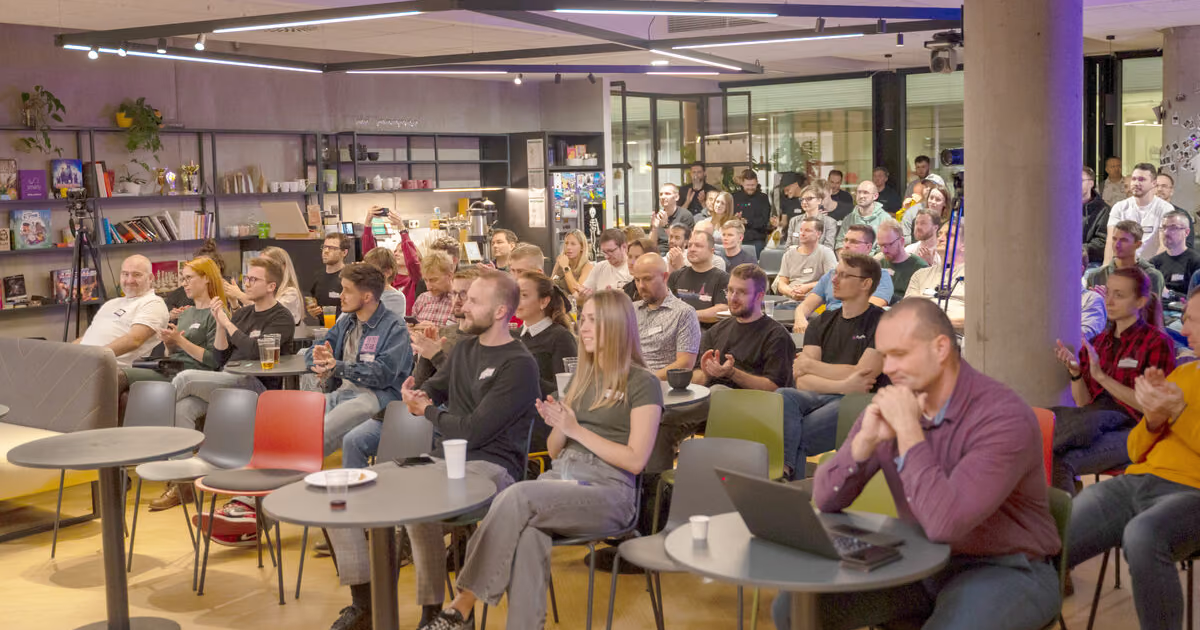
Registration desk at the door with a greeter, not inside the room. Chairs facing the screen with an aisle for the roaming microphone. A side screen that runs the Q&A code and the faces to meet all night. A marked Hot Takes Table in the networking area, a Wall of Wins between the bar and the door, and a speaker safe zone with bags, water and their slides tested on the real screen. Then the walk-in test: one person walks the route from the street to a seat as a stranger.
What is the best way to end a meetup?
With a spike and a switch. The spike is the quiz on what the speakers said, five questions, leaderboard on the screen, three winners on stage; most meetups end on a soft "thanks for coming", this one ends with a competitive, laughing room. The switch is physical: music up, lights up, six words from the host, then the host walks off the stage into the crowd. No drifting, no tapering.
What should never go on a meetup slide?
A speaker's bio paragraph. An agenda for the talk. "Any questions?" as a slide. A stock photo. A generic teamwork diagram. The words synergy, journey, unlock and transform. The sentence "we'll send you the slides". The networking games page has the prompts that do belong on the screen during the networking block.