
August 11, 2026 | Marian Kamenistak
Engineering Manager Coaching: Do You Need It Yet?
I pulled the Czech search results for “engineering manager coaching” this week and read all twenty. Positions two through six all sell something you pay a person for. Position two is mine, and so is position fifteen.
That run of five is the trouble with this question. The people best placed to tell you whether you need a coach are the people whose invoices depend on the answer.
So here is the version written by someone who sells one of these things and will still tell you to try the free one first.
Coaching, mentoring and a room of peers differ by who holds the answer
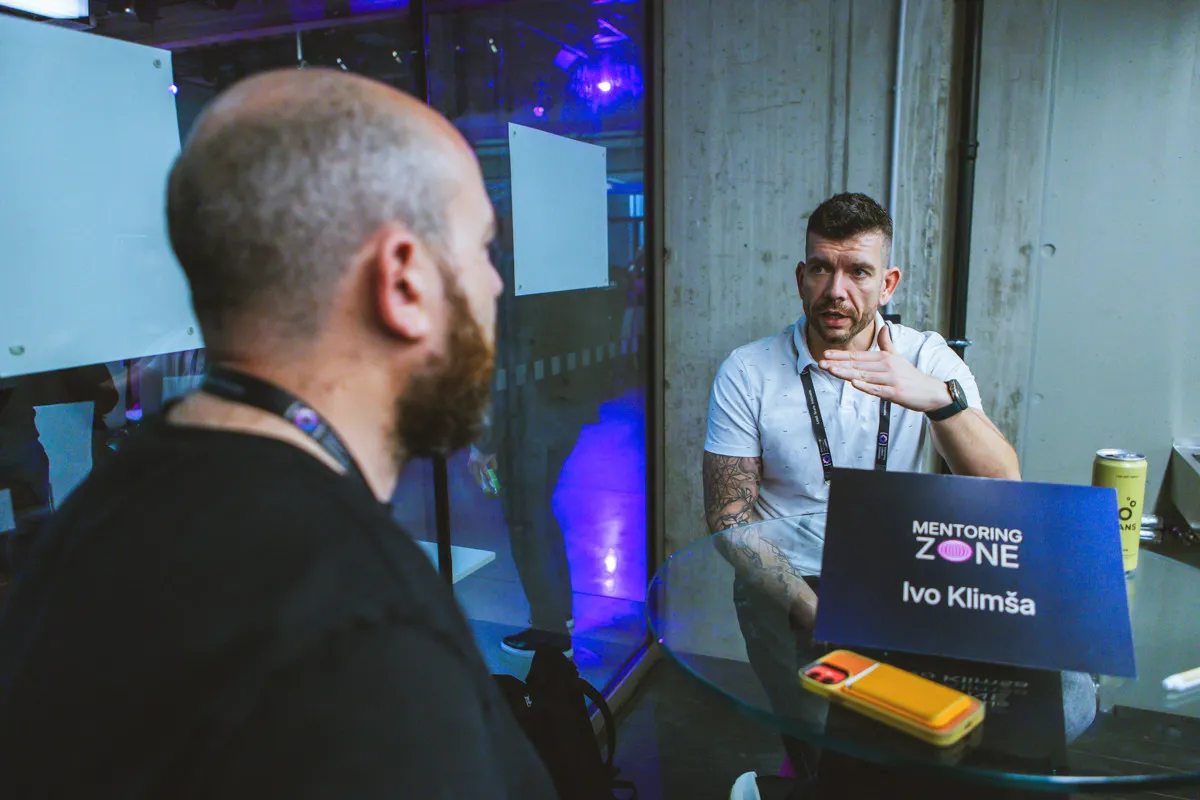
Three products wear one word in these search results, and they are not price tiers of each other. They differ by where the answer already lives.
A coach assumes you hold it. Their job is to ask the question that gets it out of you. Good coaching is a thinking process, not an information transfer.
An operator mentor holds it, because they have run your job. I will quote our own mentoring page here, which you should discount accordingly, because it states the distinction more bluntly than anything neutral I could find: “A coach asks you questions. An operator mentor has run your job, at your scale, and tells you what worked, what failed and what it cost. You leave with a decision, not a reflection exercise.”
A room of peers holds no single answer. People who hold your title have each solved a version of your problem badly, and you get to compare the failures. Different instrument, not a cheaper one.
| Coach | Operator mentor | Room of peers | |
|---|---|---|---|
| Who holds the answer | You do | They do | Nobody, you triangulate it |
| You leave with | A decision you reached | A decision, and what it cost them | Whether your problem is normal |
| Typical commitment | Months on a retainer | One session at a time | One evening at a time |
| Where it fails | When the gap is information | When your situation is genuinely new | When you cannot say the thing out loud |
The rule that falls out of this is unglamorous. Pick by what is missing. Missing information points at a room or a mentor. A decision you keep avoiding points at a coach, because the room has already told you and it did not help.
One step comes before all three, and it is the cheapest thing in this post. Check what your own manager is doing. If your one to ones with them keep getting cancelled, or they have turned into status updates rather than problems, fix that before you spend anything. A paid coach is an expensive substitute for a manager who is not doing the job.
Five results, four different products, one word
The top result is the most honest page on this search. Gergely Orosz’s curated list of coaches and mentors recommends people he rates and states plainly that he has no bandwidth for one to one work himself. He is not the problem here.
He answers which coach. He does not answer whether. And his European names sit in Berlin, Vienna and Budapest, so a manager reading it in Prague, Brno, Bratislava or Kraków finds a list with nobody on their tram line.
Below him sit five consecutive results, and they are four different products. Two sell interview preparation rather than leadership work. One is a marketplace brokering other people’s time. One is a mentoring page, which by the table above is not coaching at all, and that one is mine. Exactly one of the five is a leadership coach selling coaching.
That is the point rather than a quibble. The search phrase flattens four distinct things into one word, so a manager who types it gets shown a coach, a mentor, a marketplace and an interview drill as if choosing between them were a budget question.
Now my own conflict, stated with the number rather than a hedge. I sell one to one time. Mentoring through the ELC network runs 395 EUR a session, or 1,975 EUR for a quarter of six (5 paid + 1 free), ELC members get 10% off every package, and a session you rate below 7 out of 10 is free. I profit when you buy the middle column of that table. Ranges by credential and programme length are maintained on what executive coaching costs in 2026, and I am not going to run a second copy of that here.
Nothing in these twenty results is a room you can walk into
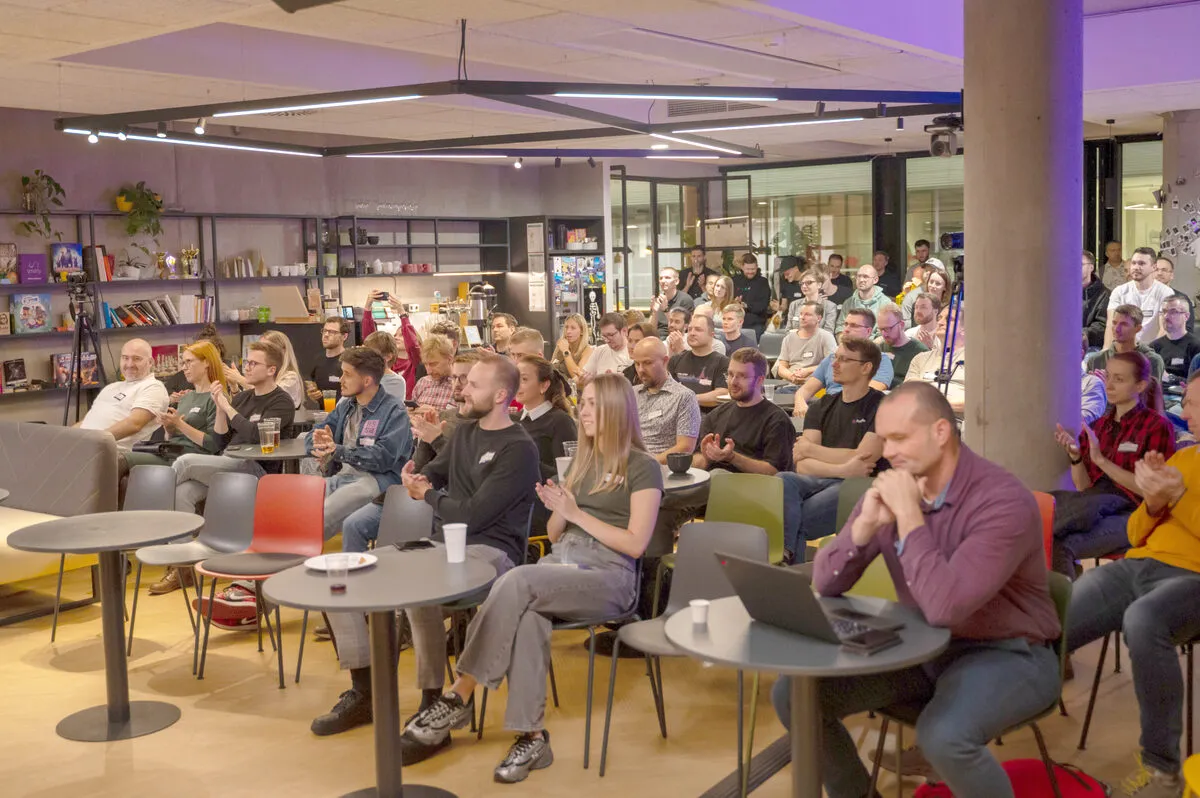
Nine of the twenty results offered paid one to one help. Two offered a free room, and both were forums: Reddit at eight in the Czech run, Quora at twenty.
Worth saying plainly rather than stepping around, because it is the strongest argument against this whole post. The r/EngineeringManagers thread is a peer room. It is free, it works tonight without leaving the sofa, and for the sayable version of your question it is genuinely good.
What no result on this search offers is a room you can stand in. Search rewards pages with a commercial reason to exist, and a free meetup has no budget for one, so the free local option is invisible to the exact person looking for it.
So here is the missing option in numbers. ELC has held 40+ meetups since 2019, and the cadence is now 12 a year, monthly in Prague plus Brno, Bratislava and Kraków editions, with 120+ registrations each time. The early years ran at a fraction of that. Membership stands at 3,184 in August 2026.
Of the 1,263 member profiles carrying a job title or a LinkedIn headline, 289 are engineering managers, ahead of 173 directors and heads of engineering and 132 founders. Engineering managers are the largest recorded segment, and every one of those figures is a floor rather than a count, because it only sees the profiles where somebody filled the field in.
One person gives you one considered read on your problem. A room tells you whether your problem is normal, which is the question you came with.
The question a first-year engineering manager most needs answered is not how to fix the thing. It is whether the thing is normal.
Is it normal that two of my six one to ones are pure therapy? Is it normal that I have not written code in four months and miss it? Is it normal that my skip level knows more about my team’s delivery than I do?
One person cannot settle that, however experienced, because they are giving you a considered read rather than a distribution. A room of people at your own career stage, in a single evening, is the distribution, and it costs a tram ticket. The same room answers the question two rungs up, which is where the CTO seat around here is filled from.
A coach reading this will object, and the objection is good. Their case is that one experienced coach has carried more engineering managers through this transition than anyone standing at a meetup, and I have no counter-number for it.
True, and it is why the room is not a substitute for coaching. The room wins on three things only: it is free, it is this week, and it gives you people at your exact stage all at once rather than one opinion at a time. Nobody has studied whether it works better, and I am not going to claim it does.
Turning up is a free membership and the dates are on the events page.
There are also circles, small cohorts that keep the same people in the room month after month, 5 of them running now. Those come through company membership, so that door is your employer’s budget rather than yours.
If you are nowhere near those four cities, the Reddit room above is the honest fallback. Same instrument with the room taken out of it.
None of this is generosity. Free members are how ELC sells company membership to their employers, and a room full of engineering managers is also the top of my own mentoring funnel. The honest version is that I would rather have you in the room for two years than sell you one session tonight, which is a preference, not a virtue.
Three signs the free step has done its job
Three signals that the free step has done its work and it is time to pay somebody.
You have heard the same answer twice, from two people who do not know each other, and you still have not done it. That is not an information gap, so a third room will not close it. This is the cleanest signal that one to one time is worth money.
The thing you cannot say out loud. A meetup is a public room with your market standing in it. Some problems involve your CEO, your co-founder, or your own doubt about whether you want the job at all. The room can tell you whether the sayable version of your problem is normal. The unsayable version is the part you pay for.
The problem is the shape of your org, not the category. Rooms are good at categories. When the answer depends on your specific reporting lines, your specific tech debt and the specific person you inherited, a generic answer is worse than none. How far the same job title varies between two companies is the same problem in a different coat.
Once you are there, pick with the rule from the top. Information you do not have points at someone who has run it, which is what ELC’s mentoring bench is for, or my own manager track if you want the seat I sit in personally. Information you already have and keep not acting on points at a coach, and I am not the person to sell you one.
Eastern Europe has 10,000 coaches, and the average one works 7.7 hours a week at it
The 2023 ICF Global Coaching Study, reporting 2022 figures, estimates 10,000 coach practitioners in its Eastern Europe region against 30,800 in Western Europe. The regional market comes to $161 million against Western Europe’s $1,421 million.
Market size is not the interesting number. The working week is.
The average coach in that region spends 7.7 hours a week coaching and carries 8.4 active clients. In Western Europe it is 12.0 hours and 11.5 clients.
That says something real about the market and nothing at all about the person sitting opposite you. It is a mean, so the shape behind it is invisible. Somebody fifteen years in who now works two days a week on purpose looks identical in that number to somebody who started in March.
So do not ask a coach about their hours, and do not shop on their rate. Ask for reps. How many people at my level, at roughly my company size, have you worked with in the last twelve months, and how many are still with you? Somebody with a full book answers in one breath. Somebody thin on reps will tell you about their certification instead, and a certification is a course, not a scar.
On price, the same study puts the average one-hour session at $138 in its Eastern Europe region against $277 in Western Europe. The mentoring I quoted earlier, 395 EUR a session, sits well above that regional average and I am not going to pretend otherwise.
Those are two currencies and two different instruments, so read it as orientation rather than a like for like comparison. Part of the gap is that the ICF means cover life and wellness coaching alongside executive work. The rest is a specialist premium, which you should make somebody earn rather than assume.
The workaround most people reach for carries its own bill. Hiring an Anglo-American coach over Zoom buys more reps at a higher rate. It also buys somebody who has probably not run the version of this job where the roadmap arrives from another timezone.
How I counted
The search results. I coded each result on one question: does this page offer paid one to one help. In Czechia nine of twenty did, at positions 2, 3, 4, 5, 6, 10, 15, 17 and 18. Paid courses and training certificates were coded as not offering it. Counting those two as offers would make it eleven of twenty rather than nine, so I took the more conservative reading.
The query was run through DataForSEO’s live organic endpoint for “engineering manager coaching”, English, desktop, on 2026-08-11, in three locales, because a post about Central European readers should not be argued from a United States result set. Czechia and Poland at 20:59 UTC, the United States at 20:44 UTC. The Prague run is the one quoted above.
The three locales agree more than they differ. Gergely Orosz holds number one in all three. The same five sellers cluster at the top of each. The United States run pushes marian.coach down to eight and Reddit up to two, so the American reader gets one more forum and one less advert than the Czech one.
The member figures. Floors, not counts. 289 engineering managers means 289 profiles with that title recorded, out of 1,263 profiles carrying any title, out of 3,184 members. Titles are self-entered, so the real number is higher and I cannot say by how much.
The ICF figures. Self-reported by coaches who answered a survey, so they describe the coaches who answer ICF surveys rather than every coach working in the region.
One limit I could not close: the executive summary does not list which countries sit in its “Eastern Europe” grouping, so I cannot confirm how much of that 10,000 is Central Europe rather than markets further east.
What I could not source. Two claims that would have helped this post do not survive checking. The “60% of first-time managers fail within 24 months” figure attributed to CEB traces to no primary document I could find. And as said above, there is no study comparing peer-group outcomes against one to one coaching for engineering managers, so the case for the room rests on cost, speed and access rather than on efficacy data that does not exist.
The reason the free local step is missing from your search results has nothing to do with how well it works. It is that a room of 120 people has no advertising budget, and the five results above it do.
Next dates are on the events page. Turn up and tell me the sequence is wrong.
Questions people ask
What is the difference between coaching and mentoring for an engineering manager?
They differ by who holds the answer. A coach assumes you hold it and asks the questions that get it out of you. An operator mentor has run your job at your scale and tells you what worked, what failed and what it cost, so you leave with a decision rather than a reflection exercise. A room of peers holds no single answer and instead tells you whether your problem is normal.
Do I need a coach, or should my own manager be coaching me?
Check the cadence first. If your one to ones with your own manager keep getting cancelled, or they are status updates rather than problems, fix that before spending money. A paid coach is an expensive substitute for a manager who is not doing the job. Buy help when the gap is something your manager cannot supply, such as experience of a scale nobody above you has run.
How much does engineering leadership coaching cost in Europe?
The 2023 ICF Global Coaching Study, using 2022 figures, reports an average fee of 138 US dollars per one-hour session across its Eastern Europe region and 277 in Western Europe, against a global average of 244. Those are survey means across every kind of coaching, life and wellness included, rather than quotes for engineering leadership work, so a specialist in this field will ask for more and should be made to earn it. Rates broken down by credential and programme length are maintained on marian.coach.
Is a peer group better than a coach for a new engineering manager?
It is not better, it is first, and it is free. A room answers the question a first-year engineering manager most needs answered, which is whether the thing happening to them is normal. Once the room has told you the same answer twice and you still have not acted, that is the signal to pay for one to one time.
When in an engineering manager's career does coaching start to be worth it?
When the missing thing stops being information and starts being a decision you keep avoiding. Three signals: you have heard the same answer from two people who do not know each other and still have not done it, the real problem is something you cannot say out loud in a public room, or the problem is the specific shape of your org rather than the category.
Where do I find engineering manager peers in Central Europe?
ELC runs 12 meetups a year, monthly in Prague plus Brno, Bratislava and Kraków editions, with 120+ registrations each time. Among the 1,263 member profiles that carry a title, engineering managers are the largest recorded segment at 289, ahead of directors and heads of engineering. Membership is free. The upcoming dates are on the events page.